

The February events in Hungarian history include the execution of Brigadier Béri Balogh Ádám on February 6, 1711, by order of the Habsburg court…
“I particularly commend to your attention that brigadier named Béri Balogh Ádám, who in recent weeks pursued His Majesty himself beneath the walls of Vienna.”
(Örsi Ferenc: The Captain of Tenkes)

Béri Balogh Ádám was born around 1665 in Hegyhátkisbér, located in Vas County. At least the noble predicate béri ties his birthplace to the present-day village of Bérbaltavár. Other possible locations have also been suggested, such as Muraszombat (Murska Sobota).
The brigadier’s family had played an important role in the border fortress wars for generations. Béri Balogh Ádám’s great-grandfather was the captain of Tata and Kapornak at the end of the 16th century. His father was named Béri Balogh István, and his mother was Káldy Rebeka of Felsőkáld. We know of one sister, named Judit.
Béri Balogh István was no longer among the living by 1674, and Káldy Rebeka’s second husband became Perneszy Gáspár. In 1685, Ádám and his sister divided their father’s inheritance. The young man presumably acquired a legal education, but we do not know which schools he attended.

The legendary soldier also began his career fighting against the Ottomans in the War of Liberation launched by the Holy League starting in 1684. The young man served for a long time in Csobánc, then acted as chief magistrate in Sopron and Vas counties. Despite his origins, Béri Balogh Ádám contracted a very advantageous marriage, as around 1690 he was able to lead Festetics Julianna—daughter of the family later elevated to princely rank—to the altar.
In 1691, he lived in Sopron County, with estates in Mihályi and Kisfalud. In 1695-96, he was appointed chief magistrate of the Rábaköz district. He soon resigned from his position and sold his estates. He moved to Vas County, to Rábakovácsi (present-day Meggyeskovácsi), then to his estates in Tolna County, to Fadd. In 1700, he returned to Vas County, and on May 14 of that year, he was elected chief magistrate of the Rábamellék district.

As a result of his marriage, during the first period of the Rákóczi War of Independence, Béri Balogh pursued a two-faced policy, for while his heart would have led him to the Kuruc (anti-Habsburg) camp, his father-in-law repeatedly steered him back to loyalty to the court between 1703 and 1705, a time when Transdanubia changed hands on numerous occasions.
We know that in early 1704, he joined the noble movement that invited Károlyi Sándor to Transdanubia. When Béri Balogh Ádám joined the Rákóczi War of Independence, he was appointed captain of a thousand. He received an order to levy troops, with the Kemenesalja region designated as his recruitment district. On January 16-17, he had already subdued Kőszeg, after which he raided in Austria.
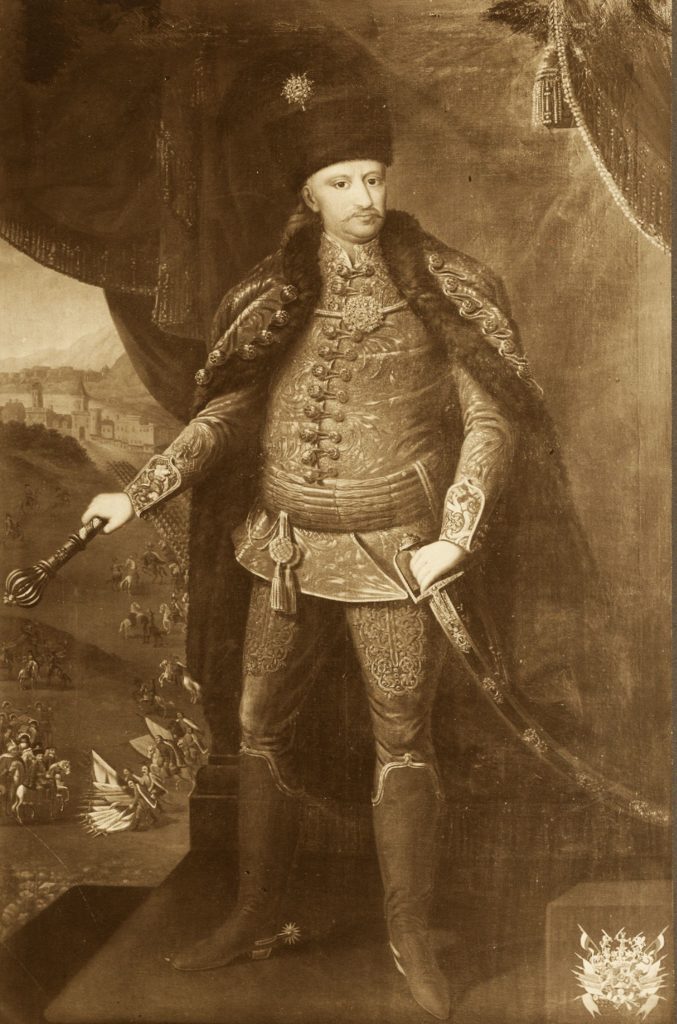
Then, when the Kuruc forces withdrew from Transdanubia at the end of March, Béri Balogh Ádám, under the influence of his father-in-law, returned to his allegiance to the Emperor. But perhaps he was only being tactical. In May, when Forgách Simon made another attempt to occupy Transdanubia, he once again became a supporter of Rákóczi.
Thus it lasted until 1705 before Béri Balogh Ádám finally decided about his future; after that, however, he became one of Rákóczi’s most steadfast and loyal soldiers. In early 1705, he crossed back into Transdanubia with Károlyi Sándor, and he was given the role of commanding the general’s rearguard when the latter once again left the region. During the summer of that year, he raided around the camp at Solt and defeated the Serbs. He returned to his beloved Transdanubia during the November-December campaign of Bottyán János, and by early December, he was at Kőszeg and captured the town.

In 1706, he fought in Southern Transdanubia, and on November 6-7, he achieved his greatest victory to date at Győrvár, together with Bezerédj, over the forces of Hannibal Heister. Béri Balogh, at the head of the victorious cavalry charge, received three head wounds in the battle. In recognition, he received the Szentgyörgyvár estate from Rákóczi, but Bercsényi prevented his promotion to brigadier.

Due to his strictness, decisiveness, and sense of duty, Béri was not very popular among his subordinates. He was stubborn, hot-tempered, and easily offended, which caused his soldiers to resent him, but he was also a thorn in the side of Bercsényi Miklós or his cousin, the famous Kuruc brigadier Bezerédj Imre.
In early 1707, he fought against the army of General Rabutin de Bussy, which was pushing into Transdanubia, in the area around Lake Balaton. Béri Balogh, who expertly employed raiding tactics, defeated a unit of the Imperial troops at Kenese. On March 3, he clashed with the enemy again at Hosszúfalu, then, joining forces with Bezerédj, he attacked the combined army of Rabutin and Max Starhemberg between Sárvár and Sitke. At the end of the year, he defeated the Croats of János Draskovich at Mosonszolnok. After that, he campaigned in various parts of Transdanubia.

However, despite his successes and contrary to the request of his commander, Esterházy Antal, the Kuruc high command did not consent to his promotion to brigadier. The primary reason for this was likely Béri Balogh’s earlier hesitation. Nevertheless, the colonel repeatedly proved his loyalty, for example, by standing by Rákóczi even after the disastrous defeat at Trencsén in 1708.
In the months following the defeat, as many from the Kuruc officer corps defected to the side of Joseph I (r. 1705-1711), Béri Balogh’s promotion became “timely.” Thus, in September 1708, the man, already serving as a brigadier, achieved a great victory at Kölesd against the Serbs pushing north, for which Rákóczi finally appointed him brigadier.

In the summer of 1709, Heister and Nádasdy Ferenc scattered his regiments in several clashes. In August, he was driven out of Transdanubia, and his family was taken prisoner by the Imperial forces. In early 1710, he took part in the relief of Érsekújvár, the raid on Tavarnok, and the battle of Egerszeg (February 12-13). In July 1710, he crossed into Transdanubia for the last time, during which he himself was wounded. He raided as far as Vienna, but the people no longer stood by him.

Unfortunately, along with Esterházy Antal’s main forces, he was also driven from his native region, and the final desperate Transdanubian campaign launched in the autumn of 1710 likewise brought him no fortune. On October 29, 1710, Serbs led by Secula encircled his army near Szekszárd; while jumping a ditch, his famous horse, Murza, collapsed beneath him, and he himself was captured. He was first taken to Eszék, then to Buda.
When the news spread that the famous brigadier had fallen into enemy hands, the Kuruc high command moved heaven and earth to negotiate his freedom; Rákóczi himself attempted to save Béri Balogh Ádám during the negotiations at Vaja with Pálffy János. However, in this matter, neither the Imperial commander-in-chief nor the Vienna court was willing to compromise.
Since he had switched sides multiple times, this partly led to him being considered a traitor in Vienna, and after his capture in 1710, they decided on his execution. The brigadier was found guilty of perjury and desertion by the military tribunal in Buda on February 4, 1711, and the death sentence pronounced upon him was carried out on February 6. It is assumed that the verdict was a message to Rákóczi’s followers.

In the 300 years since, Béri Balogh Ádám has grown into a legend, one of the most famous Kuruc brigadiers, whose memory is preserved in poems born on the people’s lips—and perhaps from the pen of Thaly Kálmán—as well as in the numerous public squares and various institutions named after him. Memorials preserve his figure at the sites of his victorious battles (Győrvár, Kenese, Kölesd), in the park of Vaja Castle, on the wall of the County Hall in Szombathely, in Külsővat, Szekszárd, and Bérbaltavár. His name was also preserved by the television series The Captain of Tenkes.
Listen to the famous song about Balogh Ádám: https://www.youtube.com/watch?v=-8EENMfRFbE
The 19th-century historian Kálmán Thaly was so impressed by his personality that he wrote a poetic song in his memory, beginning with Török bársony süvegem… (“My Turkish velvet cap…”). His figure became intertwined with heroism, valor, and courage, making him one of the most well-known figures of the Rákóczi War of Independence.

Sources: Szibler Gábor and Magyarfórum
Dear Readers, I can only make this content available through small donations or by selling my books or T-shirts.
Please, support me with a coffee here: https://www.buymeacoffee.com/duhoxoxa
You can check out my books on Amazon or Draft2Digital. They are available in hardcover, paperback, or ebook:
https://www.amazon.com/dp/198020490X or at https://books2read.com/b/boYd81
My work can also be followed and supported on Patreon: Become a Patron!http://Become a Patron!
Become a Patron! Donations can be sent by PayPal, too: https://tinyurl.com/yknsvbk7


https://hungarianottomanwars.myspreadshop.com/all
Subscribe to my newsletter here: https://tinyurl.com/4jdjbfkn