Subcarpathia / Kárpátalja

Subcarpathia or Transcarpathia can be found in Ukraine. It is called Kárpátalja in the Hungarian language, in Ukrainian it is Закарпатська область / Zakarpatska Oblast, it is proffered that “over the Carpathian Mountains area” as viewed from Kiev, describing it from the other, Eastern side of the mountains. The region covers 12,800 square kilometers, which is bigger than Kosovo (10,887 km2), its size can be compared to the Székely Land (12,800 km²) in Romania. About four-fifths of it is a mountainous area, and it has borders with Hungary, Slovakia, Romania, and Poland.

The main towns are Beregszász (Берегове), Csap (Чоп), Huszt (Хуст), Munkács (Мукачев), and Ungvár (Ужгород). This region is quite different from the rest of Ukraine because of its terrain and its multi-ethnic inhabitants. The majority of them are Ruthenians (Rusyns) who used to have a different history from Ukraine until the end of WWII. We will learn more about them a bit later.
The local Hungarians regard Beregszász as their center where they used to be in majority some 15 years ago. In Subcarpathia, there are about 100 villages where we can find many Hungarians, more than half of these villages are still dominantly Hungarian. The other 479 villages are populated mainly by Ruthenians who had been sharing history with the other peoples of the Kingdom of Hungary for one thousand years. As there are many indigenous ethnic Hungarians living in Subcarpathia, it is important to take a glimpse of this region’s history between 895 and 1945. Let me underline that its history was part of Hungary’s mainstream history.

This land is extremely scenic because of the Carpathian Mountains. The castles, palaces, and churches just make it look even more romantic. The highest peak is 2,061 meters high, it is the Hoverla. The longest river that crosses the region is the Tisza, it has a 200-km-long section there. Other sizeable rivers are the Tarac, the Talabor, the Nagy-Ág, the Borza, Latorca, and the Ung.

The main cultural attractions are the castles, though. The most important sights are Munkács castle and Ungvár castle but we must add Huszt castle, Kankó castle (За́мок Ка́нків), Nyalábvár castle (Замок Ньолаб) to the list. There are also the ruins of Nevicke (Невицьке), Szerednye (Середнє), Kovászó (Квасове), Baranka (Бронька), Bodoló, Dolha, Gerény, Tóvár and Viski castles, the description of most of them can be found on my page.

We have to talk about the famous medieval churches in the region, too. Regarding the Romanesque style, perhaps the round church of Gerény (Горяни) is the nicest which is located on the outskirt of Ungvár. Inside, there are the most spectacular medieval murals of the Subcarpathian region. You can see splendid churches in the Gothic style in Munkács and in Beregszász, and the cathedral of Ungvár is a very nice Baroque church, just like the one in Munkács.

We have to mention the Subcarpathian village churches where the cellar is made of painted wooden panels, these are so typical all over the Hungarian villages of Transylvania and in Hungary, too. The nicest are in Csetfalva, Szalóka, Visk, and in Técső. The local Ruthenian wooden churches are also spectacular examples of architecture. In the past, there had been several synagogues in the region but now there are not so many. We can see two very nice synagogues in Ungvár and Huszt.

There are many masons and stately homes in Subcarpathia, smaller ones and great palaces alike. Perhaps the Schönborg Palace in Beregvár is the most beautiful but it is worth paying a visit to the Rákóczi Palace in Szentmiklós. We must add the Bethlen-Rákóczi palace of Beregszász and the Rákóczi palace (the so-called “white house”) in Munkács, too.

History
After the centuries of the ruling Hun and Avar tribes, there were also White Croats in the area in the 8th and 9th centuries. Before the Magyar (=Hungarian) tribes arrived in the Carpathian Basin in the 9th century, Székely Hungarian people had appeared in this region, coming from the direction of Transylvania. The army of Grand Chief Árpád entered the area through the Pass of Verecke from the East, in 895 or in 896 A.D.
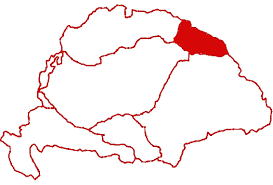
When King Saint István organized the system of Counties in the kingdom during the 11th century, two counties were established in Kárpátalja / Subcarpathia, Borsova County (later called Bereg), and Ung County. During the reign of the Árpád Dynasty, this area became the starting point of the Hungarian kings’ armies who wanted to take Halics aka Princely Halych. At the same time, the passes of the Carpathians offered a route to the nomadic Cuman and the Pecheneg (Besenyő) tribes in the 11th century to attack Hungary. These assaults were stopped by King Saint László in 1085 who defeated the last intruding Pecheneg army.

It was in the region where King András II and Jakab, Legate of the Pope signed the Treaty of Bereg in 1233. This document guaranteed the income and the privileges of the Catholic Church over the Ishmaelites and the Israelites who, in the service of the king had collected the taxes in Hungary before that. The hilly land of Subcarpathia was populated by Hungarian soldiers and minor noblemen in the 13th century during the rule of King Béla IV. However, the Mongolian Invasion in 1241 caused lots of destruction so German settlers had to be called in to repopulate the area. It was the time when the first Ruthenian communities began to appear, coming from the area of Halics.

Bratislava=Pozsony; Belgrade=Nándorfehérvár
Many Hungarian minor noblemen had to move away from Subcarpathia when the oligarchs were fighting for power after the end of the Árpád Age (1301). These noblemen were loyal to the oligarchs called Aba Amádé and Borsa Kopasz. The troops of King Károly Róbert were fighting against these oligarchs, devastating the land before they could break down their power. Later, the salt mining industry of the Máramaros Region began to flourish during the reign of King Lajos the Great.

Subcarpathia has never been a stand-alone administrative district of the Hungarian kingdom like Transylvania. When the Dual Kingship tore the kingdom into two parts in 1541, the Subcarpathian Region belonged to the Kingdom of Hungary which was ruled by Habsburg Ferdinand. However, part of it was soon occupied by the newborn Principality of Transylvania in 1567. When Prince Bocskai István made peace with the Habsburgs in 1606, the entire Subcarpathian Region was taken over by the Principality, except for Ung County. The frontier has changed several times, though.

It was King Habsburg Ferdinand II who gave Munkács castle to Prince Rákóczi György II of Transylvania in 1632. During the anti-Habsburg fight of Prince Thököly Imre, Munkács was heroically defended by his wife, Zrínyi Ilona. She was able to keep the besieging Habsburg king’s troops out of the castle for three years. The siege ended only in 1688. During the War of Independence of Prince Rákóczi Ferenc II, the son of Zrínyi Ilona, the region had been under the control of the rebels from 1703 to 1711.

The entire population of the Subcarpathian Region supported the Hungarian Revolution in 1848-1849. They fought until 26 August 1849 against the overwhelming Austrian-Russian coalition. The first Ruthenian association was established in 1864, it was the Saint Basil Association in Ungvár. It existed until 1912.
The Ruthenians / Rusyns in Subcarpathia
According to Dr. Popovics Tibor Miklós, a Ruthenian researcher today (the 2020s) there are 1.250.000 inhabitants in the Subcarpathian region, 800,000 of them are Ruthenians, and about 130,000 are Hungarians. (In 2001, there were still 150,000 Hungarians there.) Unfortunately, Ruthenians are not recognized by the Ukraine state as a distinct ethnic group: they regard them as a sub-group of Ukrainians.
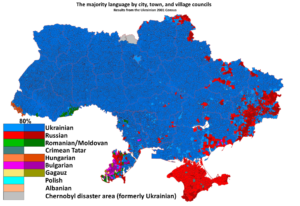
Rusyns are descended from an East Slavic population that inhabited the northeastern regions of the Eastern Carpathians. In those regions, there are several Rusyn groups, including Dolinyans, Boykos, Hutsuls, and Lemkos. As residents of northeastern Carpathian regions, Rusyns are closely connected to and sometimes associated with other Slavic communities in the region, like the West Slavic highlander community of Gorals (literally ‘Highlanders’).

In the world, there are about 1.7 million people of Rusyn origin, only around 110,000 have been officially identified as such in recent (c. 2012) national censuses. This is mainly because some census-taking authorities classify them as a subgroup of the Ukrainian people, while others classify them as a distinct ethnic group. However, the Rusyns / Ruthenians clearly distinguish themselves from other Slavic groups, based on their distinct history, language, and religious belief. We must mention that the Greek Catholic Church was particularly oppressed during the period of the Soviets. There have been many attempts to force the people to merge with the Orthodox Church. Now, there is a Greek Catholic Eparchy in Munkács.

It is important that the majority of Ruthenians belong to the Eastern Catholic Church. The Eastern Catholic Churches are 23 autonomous particular churches of the Catholic Church, belonging to the Pope in Rome. Although they are distinct theologically, liturgically, and historically from the Latin Church, they are all in full communion with it and with each other.

A small number of Hungarian Greek Catholics have emigrated to North America, where their few parishes are aggregated, in the United States of America, to the Ruthenian Byzantine Metropolia. We have to note, that the Subcarpathian region is rich in ethnic diversity: besides the above-mentioned Ruthenians and Hungarians, there are Ukrainians, Russians, Romanians, Roma, Slovakians, German, Belarus, and Jewish people.
Dr. Popovics says that the Ruthenian people were integrated into the Hungarian Kingdom so much that Prince Rákóczi II Ferenc called them the „gens fidelissima”, meaning that they were his most faithful followers. The Ruthenian people derived from several ethnic groups, and their ancestors were welcome in the Hungarian Kingdom. The researcher claims that the Ruthenians do not have a particular “homeland” that they would name but they regarded the Hungarian state always as their ” good stepmother”.
This medieval concept was born before the age of modern nationalism when the connection to the liege lord and to the religion was more important than the language. In Hungary, the so-called “rule of the Sacred Crown” used to be the context that wrought together several nations inside the Carpathian Basin.


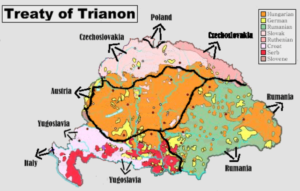
After a few years under Hungarian jurisdiction, following 1939, Subcarpathia was annexed to the Soviet Union in 1945. It was the time when they deported plenty of Hungarians to the Gulag camps. Following the disintegration of the Soviet Union, Subcarpathia became part of Ukraine in 1991. Now, the non-Ukrainian people are allowed to use their mother-tongue language only in private conversations and in church but we all hope it is going to change for the better.

Source: partly it is from the Hungarian text of the relevant Wikipedia article; some parts were taken from the documents of the World Federation of Hungarians, and from the study of Dr. Popovics Tibor Miklós.


A Folk Tale
Dear Readers, I can only make this content available through small donations or by selling my books or T-shirts.
If you like my writings, please feel free to support me with a coffee here:
You can check out my books on Amazon or Draft2Digital, they are available in hardcover, paperback, or ebook:
https://www.amazon.com/dp/198020490X
or at https://books2read.com/b/boYd81


My work can also be followed and supported on Patreon: Become a Patron!http://Become a Patron!
