
The Life and Reign of the Posthumous King
Five hundred eighty-five years ago, on February 22, László (Ladislau) V was born – the Hungarian king whom history remembers as the Posthumous. His life and brief reign marked one of the most dramatic periods of medieval Hungary, culminating in the rise and tragedy of the Hunyadi family.
László V was born on February 22, 1440, in Komárom, four months after his father, King Albert, had died – hence his epithet: the Posthumous (Latin: Postumus, Czech: Pohrobek). His mother was Erzsébet of Luxembourg, daughter of Emperor and King Zsigmond (Sigismund). At the time of his father’s death, as the last male member of the Albertine branch of the Habsburg dynasty, he was meant to inherit Austria, Hungary, and Bohemia upon his birth.

However, the Hungarian estates, fearing the Ottoman threat and unwilling to accept the uncertainties of an infant king’s minority, had already offered the crown to Ulászló I, King of Poland, before László was even born.
A Dramatic Coronation – The Infant King and the Stolen Holy Crown
László’s mother, the resourceful Queen Erzsébet, was not prepared to accept that her son would become a mere claimant to the throne due to the vagaries of fate and the complications of international relations. Even before giving birth, she devised a bold plan. She sent her lady-in-waiting, Kottanner Jánosné, to Visegrád Castle to steal the Holy Crown. The adventurous mission succeeded: the lady-in-waiting and her companion obtained the crown and delivered it to the laboring queen precisely on the day Erzsébet was in childbed – contemporaries regarded this as a miracle.

The infant László was barely three months old when he was crowned King of Hungary on May 15, 1440, in Székesfehérvár. The ceremony featured unusual scenes: Újlaki Miklós knighted the swaddled infant, then Szécsi Dénes, Archbishop of Esztergom, anointed him, and placed the crown on his head. His maternal uncle, Cillei Ulrik, held the crown above little László’s head – but the child burst into loud crying while the coronation oath was recited on his behalf. Just a few weeks later, Ulászló I marched into Buda, and the period of dual kingship began, plunging the country into nearly four years of civil war.

The Hungarian Diet declared László’s coronation invalid on 29 June 1440, stating that “the crowning of kings is always dependent on the will of the kingdom’s inhabitants, in whose consent both the effectiveness and the force of the crown reside”. On 17 July, Archbishop Dénes Szécsi crowned Ulászló (Vladislaus) king with a crown taken from the tomb of King Saint Stephen, the first king of Hungary.
The Queen’s Desperate Pact
Following the death of her husband, King Albert, and the subsequent coronation of the rival king Ulászló I, the widowed Queen Erzsébet found herself in a nearly hopeless position. Most of the powerful Hungarian lords had turned against her, and her newborn son, László V. Her situation was so dire that she was forced to seek help from outside the kingdom’s traditional power structure.
In May 1440, just after having the infant László V crowned in Székesfehérvár with the stolen Holy Crown, the Queen traveled to Győr. It was there that she summoned the Czech mercenary captain John Jiskra of Brandýs and his seasoned Hussite warriors. These were veteran soldiers, familiar with the formidable Hussite war strategies that had proven so effective in the Bohemian Wars.

To secure his loyalty, Erzsébet made a pact that would have long-lasting consequences. She bestowed upon Jiskra the title of High Captain of the mining towns of Upper Hungary and Kassa (Košice), as well as Zólyom Castle. In essence, she handed over the control of the wealthy and strategically vital northern territories to a foreign mercenary leader and his army.
The Consequences: A Land Under Siege
Jiskra proved effective in his primary mission. Using Hussite tactics, he quickly occupied key towns like Lőcse (Levoča), Bártfa (Bardejov), Körmöcbánya (Kremnica), and Eperjes (Prešov), securing the region in the name of the young László V and cutting off the Polish king’s communication lines.

However, the cost of this allegiance was immense for the people of Upper Hungary. Jiskra’s men, who called themselves “the Brotherhood,” soon began operating with impunity. The historical accounts describe them as “marauding” through the counties of Szepes and Sáros, terrorizing the local population. They imposed heavy taxes and tributes on the peasants and even forced Catholic priests to perform Hussite rituals, inflaming religious tensions.
In her desperate gamble to secure her son’s crown, Queen Erzsébet had effectively opened the door to years of instability, leaving the people of Upper Hungary at the mercy of foreign mercenaries who would remain a powerful and disruptive force in the kingdom for years to come.

The King Who Could Never Truly Rule
After his mother died in 1442, László spent his childhood years at the court of Emperor Frederick III in Bécsújhely (Wiener Neustadt), where he lived almost as a captive. The Hungarian estates repeatedly demanded his extradition, but Frederick only agreed to hand over the thirteen-year-old king to Cillei Ulrik in 1452 under armed pressure.

László V’s reign nominally began in 1453, when Hunyadi János resigned as governor. In an unprecedented move, he held a Diet outside the country’s borders in Vienna, where he appointed Hunyadi as “royal captain-general and administrator of royal revenues,” essentially maintaining his influence. The same year, he was also crowned King of Bohemia in Prague.
According to a Venetian envoy’s report, the young king was offered “sweet Greek dessert wine and walnuts boiled in sugar” for breakfast in Vienna. At the same time, at least thirteen courses were served for lunch, accompanied by strong Austrian wines, with jesters and dancers providing entertainment. Aeneas Sylvius Piccolomini, the future Pope Pius II, disapprovingly noted that flattering courtiers surrounded the weak-minded king.

During a debate between the representatives of the Austrian and Hungarian Estates about his future seat, Ladislaus declared that he was Hungarian and wanted to live in Hungary, according to Aeneas Sylvius Piccolomini.
The Hunyadi Tragedy
In Hungary, László V’s name is primarily remembered for his tragic conflict with the Hunyadi family. The roots of the antagonism extended back to Hunyadi János’s death. Disputes over the vast Hunyadi wealth and particularly the possession of the crucial fortress of Nándorfehérvár (Belgrade) sharpened relations between the royal court – especially Cillei Ulrik – and the Hunyadis. The elder son of the recently deceased Hunyadi János had all the reasons to be angry with the young king and his followers, who came to the castle’s relief only after the Christian victory. Cillei and the king arrived at the castle with 4,000 soldiers, but only Cillei and the king were allowed to enter.

On November 9, 1456, at Nándorfehérvár, Ulrik Cillei, demanding the surrender of the fortress in the king’s name, clashed with the younger Hunyadi László. The argument turned violent: Cillei drew his sword and wounded Hunyadi, whereupon Hunyadi and his men beat the scheming Cillei to death. The king, who was present in the fortress, was detained by the Hunyadi faction for five days, then escorted to Temesvár (Timișoara), where Szilágyi Erzsébet and the young Hunyadi Mátyás (Matthias) were staying. There, László V was forced to swear a written oath that no harm would come to the Hunyadis.

However, the king – likely under pressure from the baronial faction seeking revenge for Cillei’s death, including Garai Miklós and others – broke his promise. On March 14, 1457, he lured Hunyadi László to Buda and had him arrested, along with his younger brother Mátyás and their supporters, including Vitéz János, Bishop of Várad (Oradea). Two days later, Hunyadi László was executed. Legend has it that the executioner struck three times unsuccessfully because the young man’s thick hair protected his neck, and only the fourth blow decapitated him. According to medieval customary law, three unsuccessful strikes should have been followed by royal clemency.

Sudden Death and Legacy
Following the execution, the Hunyadi faction rose in rebellion, forcing László V to flee to Prague, taking his prisoner, the fourteen-year-old Mátyás Hunyadi, with him. In Prague, the young king planned to marry Magdalena, daughter of Charles VII of France – the magnificent wedding was scheduled for the spring of 1458.

However, on November 20, 1457, the king suddenly fell ill. Severe headache, fever, and then black spots appeared on his body. On November 23, barely seventeen years old, he died. News of his death sparked rumors of poisoning that spread like wildfire, and for a long time, George Poděbrady, the Bohemian governor (later king and future father-in-law of Mátyás Hunyadi), was accused of the murder.
The mystery was only solved in 1984 by Dr. Emanuel Vlček, a Czech anthropologist, when he examined the king’s remains resting in St. Vitus Cathedral in Prague. Modern examinations revealed that the mercury found in the bone tissue was not the result of poisoning but of medical treatment – the king suffered from an advanced form of cancer similar to leukemia, which was treated with mercury preparations. The cause of death was natural; the disease reached its peak within three days.

With László V’s death, the Albertine branch of the Habsburg dynasty became extinct. Two months later, the Hungarian estates – organized by Erzsébet Szilágyi and Mihály Szilágyi – elected Mátyás Hunyadi as king. The coffin of the executed Hunyadi László was moved by his younger brother, King Mátyás, to Gyulafehérvár (Alba Iulia) in 1458, where he was buried beside his father.

Szilágyi Erzsébet, Matthias’ mother, didn’t forget the loss of his son, László. She was said to have threatened the Germans at the coronation of her son, saying that “one year will not be spent and we are going to shed the blood of many Germans, our horses will wade in German blood up to their knees.”
The life and death of László V – although his personal decisions, particularly the execution of Hunyadi László, forever left a dark stain on his memory – ultimately enabled the rise of the Hunyadi family and Mátyás’s accession to the throne, whose reign became one of the golden ages of Hungarian history. The fate of the king crowned as an infant, living in captivity as a child, and dying as a youth stands as one of the saddest examples of medieval dynastic struggles.

Dear Readers:
Please, support me with a coffee here: https://www.buymeacoffee.com/duhoxoxa
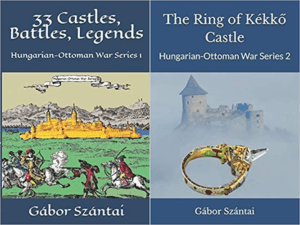
You can check out my books on Amazon or Draft2Digital. They are available in hardcover, paperback, or ebook:
https://www.amazon.com/dp/198020490X or at https://books2read.com/b/boYd81
My work can also be followed and supported on Patreon: Become a Patron!http://Become a Patron!
Become a Patron! Donations can be sent by PayPal, too: https://tinyurl.com/yknsvbk7

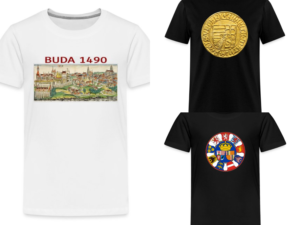
https://hungarianottomanwars.myspreadshop.com/all
Subscribe to my newsletter here: https://tinyurl.com/4jdjbfkn